Graduate Stories Graduate Stories

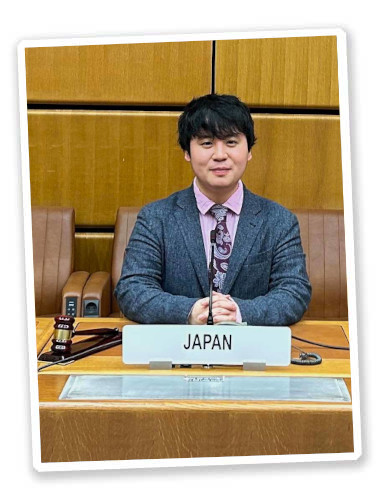
Mr. Sora Shinzaki (1st Graduating Class)
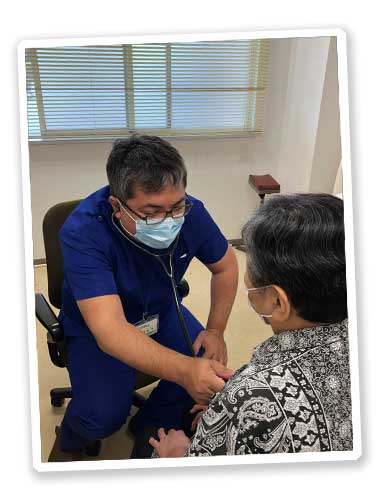
Mr. Sora Shinzaki (1st Graduating Class)

Graduated from Kagoshima University, Faculty of Medicine, School of Medicine

Current Occupation: Working at Shonan Hospital (Diabetologist)

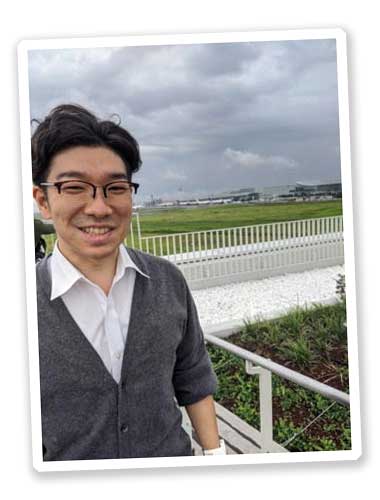
I currently work as an internist, practicing primarily in Kagoshima, as well as in Yamagata and Hokkaido. What these locations have in common is that they are all areas facing medical underservice and doctor shortages. In Kagoshima, on the Osumi Peninsula which is home to about 280,000 people, I am the only full-time hospital diabetologist, primarily managing lifestyle diseases like diabetes. Seeking out work where I am truly needed has, through various connections, unexpectedly resulted in me flying all over the country. The early morning and late-night travel can be demanding on a body past 40, but I have always loved transit, and the presence of patients who need me in each region (or so I like to believe) serves as my greatest motivation. Though we are all called "doctors," our roles and working styles vary immensely. I don't perform dramatic, life-saving surgeries, but my goal is to converse deeply with patients, offer new insights while gaining insights from them in return, and help them live out their lives in good health.

Having studied through the Kumon Method since childhood, I applied to Kumon Kokusai Gakuen upon hearing that the academy would open exactly the year I was to enter as a 7th grader. I took the exam with high expectations, feeling as though we were about to paint a blank canvas with our own vibrant colors. In junior high school I joined the Concert Band, in high school I was part of the Mathematics Club, and I also had the privilege of serving as Student Council President. Through dormitory life, I learned to debate thoroughly with friends, juniors, and occasionally faculty, while learning to respect each other's perspectives. Although there were minor constraints due to being students, life at the academy was fundamentally "free." During a volatile adolescence when it is easy to mistake freedom for selfishness, I learned over the years that freedom is synonymous with responsibility. While structural events like the Expression Festival (cultural festival), Sports Day, and school trips remain wonderful memories, organizing them required immense individual responsibility. Since nothing was simply handled for us by someone else and we had to build everything from scratch, I discovered the importance and joy of being needed. These versatile experiences form the baseline of who I am today.
Mr. Yoshiyuki Higashi (2nd Graduating Class)

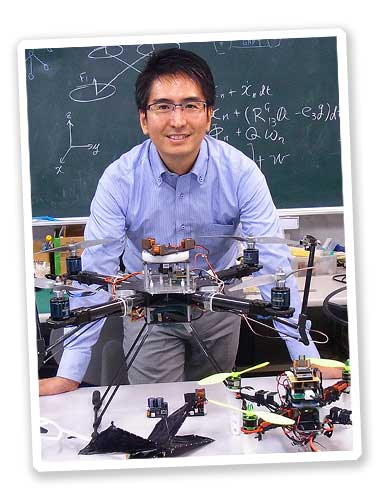
Mr. Yoshiyuki Higashi (2nd Graduating Class)

Graduated from Nihon University, College of Industrial Technology, Department of Aerospace Engineering; Completed Doctoral Program in Intelligent Mechanical Engineering, Graduate School of Electro-Communications, The University of Electro-Communications

Current Occupation: Assistant Professor, Department of Mechanical and Systems Engineering, Graduate School of Science and Technology, Kyoto Institute of Technology

After graduating from Kumon Kokusai Gakuen, I studied aerospace engineering at the undergraduate level and control engineering in graduate school. Currently, I am involved in research and student education at the Robotics Laboratory of the Kyoto Institute of Technology. My field of specialization is robotics and mechatronics, and I conduct research on flying robots such as drones, as well as gait-training support robots designed to assist hemiplegic patients with walking rehabilitation. In particular, since the inspection of infrastructure such as bridges has become a major social issue, I am focusing my efforts on developing drones that can adhere to structural areas requiring inspection and perform thorough evaluations with their propellers turned off. Being able to participate in versatile phases of craftsmanship—from initial theoretical construction to mechanical design, chassis fabrication, programming, experimentation, and final evaluation for brand-new robots—and seeing my researched technology lead directly to problem resolution is highly appealing.

Looking back at my time at Kumon Kokusai Gakuen, there were numerous school events like the Expression Festival and Sports Day, each providing an opportunity to encounter things that sparked my curiosity. In our Interest Studies modules, where we chose one topic of interest from versatile themes proposed by the faculty and participated continuously for several days, there was a module where we shot photos of our choice using an SLR film camera, developed them, and paired them with haiku poems for appreciation. Prior to that, I had never considered how to properly take a photo, but I learned camera operation and the mechanics of apertures there. I vividly remember the first time I developed film and printed photos with my own hands in a darkroom converted from a restroom. Furthermore, because I belonged to both the Concert Band and the Track and Field Club, my days were consumed by club activities. Thanks to that, I was blessed with opportunities to converse extensively with many friends, seniors, and juniors, and exchanging thoughts and opinions remains an unforgettable memory. Being blessed with opportunities to challenge versatile things and meeting so many unique peers throughout my junior and senior high school life has served as an emotional anchor, alongside the words of our principal at the time, who often said "study hard and play hard." This mindset underpins my current research activities as I continuously keep my antenna raised to pursue cutting-edge technology, and forms the bedrock of my educational framework for mentoring university students today.

Mr. Hayato Nakadoi (3rd Graduating Class)

Mr. Hayato Nakadoi (3rd Graduating Class)

Graduated from Tokyo Institute of Technology, Graduate School of Science and Engineering, Department of Mechanical and Control Engineering

Current Occupation: Working as a Boeing 787 Flight Crew Member (Pilot) for a Major Airline

I have been flying the world's skies daily as a first officer since 2013. I decided to enter the academy when I was a 4th-grade elementary school student. My Kumon classroom teacher recommended it to me, and I was profoundly drawn to the school's philosophy of autonomous thinking and its dormitory lifestyle. Because the school had not yet opened at the time, I still remember studying for the entrance examinations with a thrilling sense of setting out on an adventure into an unseen school life. While being a pilot had been a dream of mine since childhood, I had no idea how to become one or what was required; it felt like a distant adventure where success was entirely uncertain.

It is no exaggeration to say that possessing a spirit of challenge similar to an adventure, alongside a playful sense of fun to advance through it excitedly, was the definitive school culture from before my entrance exam up until graduation. Additionally, this academy has neither school uniforms nor rigid school rules. While people often think, "What a beautifully free school culture!" realizing "fun" and "freedom" is actually an incredibly demanding task. Just as you might occasionally find it tedious to choose what clothes to wear on a sleepy morning, the absence of rules means challenges to think and decide for ourselves arise at every single moment. In my day, we had to decide every single night what setting to put the air conditioner on in our 4-person dormitory room.

It sounds like a very simple matter, but because the single air conditioner in the room could only be adjusted across four stages, settling on one setting was unexpectedly difficult. Rock-paper-scissors, discussions, staggered timing, or forecasted temperatures—the decision-making styles were unique to every room, but the important element was that we decided everything entirely by ourselves.

Though conflicts occurred at times, resolving problems playfully and enjoyably in the end built advanced interpersonal capabilities that have greatly benefited my current life as a pilot.

Even now, I return every year to the Expression Festival—which has been my favorite school event since my student days—to draw energy from the creativity and vitality of the current students. I am always deeply impressed by how each project reflects true Kumon character, conveying that the students thought through and polished versatile elements by themselves, putting hard work and enjoyment into their preparations. Furthermore, seeing the teachers looking just as joyful as the students is a truly lovable aspect of this academy! Severe exam studying and dormitory life away from parents are undoubtedly major adventures, but an absolutely delightful future awaits beyond them! As a Kumon Kokusai Gakuen alumnus, I am cheering you on!

Mr. Masashi Tsutaka (4th Graduating Class)

Mr. Masashi Tsutaka (4th Graduating Class)

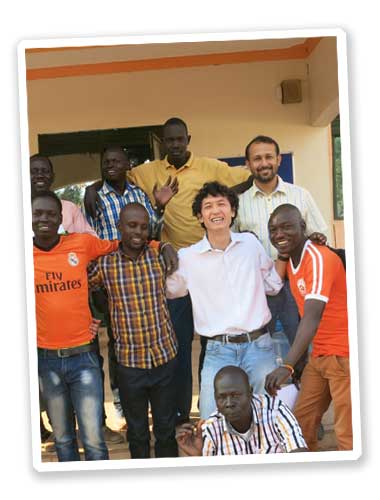
Graduated from Sophia University, Faculty of Law, Department of International Legal Studies; Obtained a Master's Degree in Development Studies from the International Institute of Social Studies in The Hague, Netherlands. Subsequently engaged in humanitarian aid operations with NGOs and international organizations across the Israeli-Palestinian conflict, the Great East Japan Earthquake, super typhoons in the Philippines, the war in Afghanistan, and conflicts in South Sudan. Most recently, served as the Deputy Head of Sub-Delegation for the International Committee of the Red Cross (ICRC: Headquarters in Geneva) in Lashio, Myanmar, directing and coordinating humanitarian aid across Shan State where seven active ethnic conflicts occur.

Current Occupation: Institute for Global Environmental Strategies

When I was at Kumon Kokusai Gakuen, the high school division was split into an International Course and a General Course. Having an interest in languages, I chose the International Course without a single doubt. The German language skills I had encountered through the Kumon Method since junior high school were studied more intensively in high school, and during my 11th-grade year, I qualified for an invitation program hosted by the German government to study abroad in Germany for one month. That experience decisively altered the course of my life. Deepening connections with high school students invited from all over the globe, such as Cameroon and Tajikistan—countries I had never even heard of at the time—made me realize for the very first time that the world contains severe wealth disparities, regions plagued by constant war, and an abundance of linguistic and cultural diversity, and that this absolute reality related directly to me. It was around this time that I decided I wanted to pursue international cooperation as my career.

Now, twenty years later, having witnessed conflict zones and disaster areas across the globe firsthand, there is one thing I can state with absolute certainty. First, the world has entered an era of heightened uncertainty due to international politics, population growth, climate change, and the attendant natural disasters and conflicts. To live and prove useful to people within such an environment, you must possess adaptability and the baseline capability to think with your own head to derive optimal solutions, extract areas for improvement when you fail, and naturally prepare for the next trial. While equipping yourself with these proficiencies, what is actually required most is heart. If you help those who are struggling without seeking anything in return, and if you can converse eye-to-eye to connect hearts regardless of any differences in background, you can thrive anywhere on Earth. If you equip yourself with that kind of human strength, you will have absolutely nothing to worry about in your future. Spending six years in this school life proves that if you learn while enjoying yourself to the fullest, achieving this is entirely possible—my own experience stands as proof.

Mr. Naoki Yamamura (5th Graduating Class)

Mr. Naoki Yamamura (5th Graduating Class)

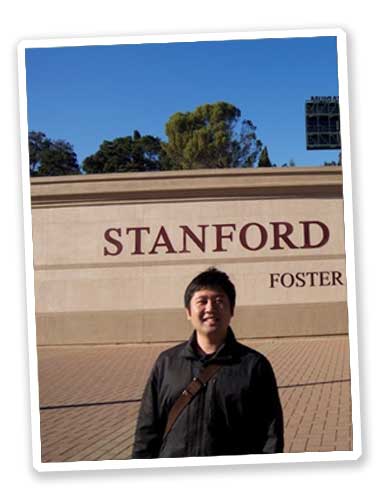
Graduated from Karlsruhe Institute of Technology, Faculty of Mechanical Engineering; Completed Master's Program in Manufacturing Engineering, Graduate School of Engineering, University of Nottingham. Joined an Indian IT corporation as a fresh graduate, working as a business analyst in India and Japan. Subsequently transitioned to the Singapore corporate entity of an American IT enterprise, leading to his current position. Concurrently enrolled part-time in the Master's Program in Computer Science, Graduate School of Engineering, Stanford University (scheduled to graduate in Spring 2021).

Current Occupation: Working as a Software Engineer at the U.S. Headquarters of an American IT Enterprise

During my first six years after joining the American IT enterprise, I belonged to the Human Resources department in Singapore and the United States, finding immense fulfillment in supporting the structural foundations of an expanding organization. However, I gradually developed a strong interest in product development that could reach a vast user base, and taught myself programming entirely from scratch. Currently, I have successfully transferred to the product engineering division and work as a software engineer. Additionally, I am enrolled in a master's graduate program, dedicating myself to academic studies alongside my career to acquire systematic knowledge and deepen my grasp of cutting-edge research modules.

While I am walking a somewhat unique career path involving overseas employment and transitioning into a completely different job specialty, I constantly feel that achieving these milestones is due entirely to my experiences at Kumon Kokusai Gakuen. During my student days, I belonged to the Soccer Club for all six years, dedicating myself almost entirely to club practices while keeping up with academics moderately. Up until November of my 12th-grade year, I had never considered entering an overseas university, but through a school introduction, I entered a German university with a stipend provided by a local corporation. Thanks to Kumon's strong emphasis on international education and English language training, I was able to select this career path with a very short preparation window. After entering the university, I was blessed with abundant opportunities through the company providing my scholarship, including research and development at their German headquarters and an internship within the manufacturing and production management division of their U.S. branch, allowing me to evaluate my future path from diverse perspectives. Furthermore, I still keep in touch with many Kumon alumni. My classmates work across versatile industries and regions, spanning doctors and venture capitalists to humanitarian aid workers in NGOs. Interacting with friends who possess diverse values outside my familiar industry allows me to encounter differing perspectives. Spending six years within Kumon's free and independence-honoring school culture and being blessed with lifelong friendships has allowed me to live my life following my curiosity even after graduation.

Mr. Ryota Hayashi (6th Graduating Class)

Mr. Ryota Hayashi (6th Graduating Class)

Graduated from The University of Tokyo, Faculty of Economics

Current Occupation: Representative Director & CEO, Finatext Holdings

After graduating from the Faculty of Economics at The University of Tokyo, I took a position at an investment bank in London, later founded my own company, and currently manage a venture enterprise called Finatext Holdings. As of July 2020, it is a company of about 200 people, and we work hard every day to achieve further growth.

It was only after entering adult society that I truly realized how remarkably blessed my junior and senior high school years at Kumon were. Symbolized by the absence of uniforms, there were field work modules that extended far beyond standard classroom lessons, opportunities to participate in Model United Nations, and options to study abroad in Switzerland. Looking back, it was a place blessed with versatile opportunities despite being a middle and high school. While curiosity serves as a critical element in university and business, I feel anew that those six years deeply nurtured my curiosity.

Furthermore, I belonged to the Tennis Club for six years starting from the 7th grade, competing in matches right up until the absolute final moments before sitting for university entrance examinations. I still remember the tears my teammates and I shed in frustration when we lost our final match. While the practices were frequently grueling, looking back, I believe they cultivated perseverance and the capacity to follow through on commitments. No matter what choices you make in life, you will inevitably run into difficulties (in fact, if you don't run into them, it means you aren't challenging yourself). I believe it was an environment where we could broaden our interests while refusing to give up on things we resolved to finish.

Finally, reflecting on it once more, I feel I was blessed with wonderful teachers. Looking back, they interacted closely with me as a middle and high school student, maintaining an excellent balance between strictness and freedom. During exam season, they stayed by my side until late hours. Furthermore, numerous international faculty members were stationed at the school, creating an environment where English naturally filled the air. Looking back, I realize I gained an experience that is rarely available elsewhere.

Even if I were told to choose my junior and senior high school all over again, I would choose Kumon Kokusai Gakuen without a single doubt. It was a student life that was profoundly enriching.

Ms. Ayami Kojima (7th Graduating Class)

Ms. Ayami Kojima (7th Graduating Class)

Graduated from Keio University, Faculty of Business and Commerce, Department of Business and Commerce; Specialized in Business Ethics.

Current Occupation: Working at the National Space Policy Secretariat, Cabinet Office (2020–present)<br>Seconded from the Japan Aerospace Exploration Agency (JAXA, joined 2009); Served at the United Nations Office for Outer Space Affairs (2017–2020)

"I want to become friends with people all over the world"—this has been my dream since before I can remember, and it remains unchanged today as an adult. I joined JAXA because of the profound appeal of working with people globally on a scale that transcends Earth, and because I hope to communicate with extraterrestrial life someday.

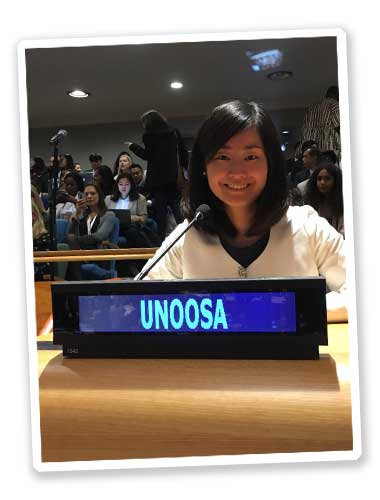
After joining JAXA, I gained experience across departments such as public relations, finance, and space education. In particular, at the Space Education Center, I discovered a calling where I felt, "This is exactly the goal of my life!" working to spark children's curiosity by leveraging space. This involved coordinating with schoolteachers across various regions to conduct cross-disciplinary collaborative lessons spanning not only science but also home economics and physical education. Furthermore, starting in January 2017, I was deployed to the United Nations Office for Outer Space Affairs (UNOOSA), where I assisted developing countries in taking their "first steps" toward space development in cooperation with spacefaring nations like Japan and European countries. For instance, in collaboration with Japan, we facilitated the release of Kenya's first independently developed ultra-small satellite from the Japanese module "Kibo" on the International Space Station. In cooperation with Germany, we provided students from versatile nations with experimental opportunities at the world's tallest drop tower. It was a career that acted as a bridge between nations through space. Subsequently, I served as the Outer Space Affairs representative for a UN-wide youth engagement initiative titled "Bringing Youth Voices to the Global Stage," creating platforms where young people could engage in discussions with world leaders. I launched an essay contest for youth worldwide focusing on "How space can contribute to the Sustainable Development Goals (SDGs)," chaperoning the top three winners to the International Astronautical Congress (IAC) to engage in discussions with heads of space agencies and astronauts, thereby building an arena where both sides could gain new learning and insights. Currently, I am working at the Cabinet Office, where future space policies for Japan are determined. Leveraging my experience at the United Nations, I am involved as an international relations officer in state-level policy decisions and versatile projects regarding how Japan will cooperate with individual nations on future space development.

Kumon Kokusai Gakuen, which possesses neither school rules nor uniforms, carefully nurtures each student's unique individuality. This environment shaped the Ayami Kojima who exists today. Friends from Kumon came to visit me in Vienna during my UN deployment, and we frequently keep in touch even after my return to Japan. When making critical decisions in life, the confidants I consult are always my friends and teachers from Kumon. A culture that naturally acknowledges diverse values, and a school atmosphere where you can express opinions straightforwardly to teachers and the principal without being intimidated by seniority, unconsciously cultivated vital capabilities for surviving in international society. I am filled with profound gratitude. In particular, participating in the Model United Nations in The Hague, Netherlands, completely altered my life. This experience made me resolve, "I am absolutely going to the UN," and I was able to achieve that initial step of my dream.

Mr. Hinata Oshima (12th Graduating Class)

Mr. Hinata Oshima (12th Graduating Class)

Graduated from Keio University, Faculty of Law; Graduated from Leiden University (Advanced LL.M. in Air and Space Law); Enrolled in the Doctoral Program in International Law, Graduate School of Law, Kyoto University

Current Occupation: Attorney-at-Law (Nakamura, Tsunoda & Matsumoto); United Nations Secretariat Official (Committee, Policy and Legal Affairs Section, Office for Outer Space Affairs *until 2026)

I practice as an attorney-at-law specializing in corporate legal affairs. Additionally, from 2024 to 2026, I am stationed at the United Nations Office for Outer Space Affairs in Vienna, handling space law matters.

The world of law is complex yet exceptionally intellectual and filled with fascinating arguments. For instance, while outer space is not the territory of any sovereign nation, should extracting lunar resources and utilizing them commercially (as one's own property) be permitted? For instance, why are corporate directors held accountable when corporate misconduct is uncovered, even if those directors were not directly involved in the misconduct themselves? For instance, does our "right to freely determine the course of our own lives" encompass a right to commit suicide or undergo euthanasia? In reality, much of a legal professional's work is not the task of memorizing and reciting what is written in statutes, but rather the process of thinking logically about matters that are not explicitly written in the law. Leveraging law and logic to secure the absolute best interest of a client is what makes a legal career highly rewarding.

At Kumon, I belonged to the Soccer Club for all six years across junior and senior high school, completely dedicating myself to soccer. There were many difficult times, such as struggling to improve as much as I wanted or facing grueling practices, but winning critical matches or the exact moment of scoring a goal brought a joy so unforgettable that it remains vivid today. Through six years of club activities, I learned both the importance and the difficulty of continuous effort. The teammates I gained through club activities remain close friends today, and when I reflect on our mid-summer training camps, I feel that almost any obstacle can be overcome with just one final push. The "one final push" that has supported me throughout my life was undoubtedly cultivated during those club activities.

Furthermore, participating in the Model United Nations conference held in Singapore during my enrollment was an irreplaceable experience. At the time, my grades were such that I could not, even flattery aside, be called proficient in English. However, I still vividly remember standing before a vast crowd of foreign nationals, trembling with nervousness, as I delivered statements in broken English. Back then, I never imagined that a day would actually come when I would work for the United Nations. Yet, the reason I hold the opportunity to work overseas today is precisely because that experience at Model United Nations ignited a powerful desire to absolutely utilize English in my career someday. Hosting numerous international events is a defining characteristic of school life at Kumon.

Looking back, what those six years at Kumon provided me with was an abundance of opportunities to challenge myself. Club activities, the Expression Festival, Sports Day, and a vast variety of internal and external events ensure that everyone will encounter a moment during their six years at Kumon where they think, "I want to try that." And for most instances of "I want to try that," Kumon actually provides the opportunity to "go ahead and do it." I sincerely hope that all current students will carefully cherish their individual desires to try new things.

Ms. Hana Tomi (12th Graduating Class)

Ms. Hana Tomi (12th Graduating Class)

Graduated from Keio University, Faculty of Law, Department of Law

Current Occupation: Working as a Translator at a Major Law Firm

Since graduating, I have worked as a translator at a law firm specializing in corporate legal affairs. My daily responsibilities involve translating contracts for international transactions and M&As, as well as translating litigation materials when a company with an overseas parent corporation faces legal proceedings in Japan. Additionally, I handle the English translation of Japanese statutes published in the Ministry of Justice database. When foreign corporations or investment funds periodically disclose financial performance to Japanese investors, I also fulfill the role of drafting disclosure documents in both English and Japanese on their behalf, in compliance with Japanese financial statutes.

At Kumon Kokusai Gakuen, I served as a Sports Day Executive Committee member and a class representative, and was appointed Student Council President during my 11th-grade year. At the time, an overnight event called the "Leader Training Seminar" was held during summer vacation, where committee chairs and the Student Council Executive Board gathered at the academy to debate methods for improving school life. At Kumon, where students independently manage almost all school events, students tackled responsibilities with a profound sense of ownership and accountability, spanning everything from drafting thick operational manuals to occasionally negotiating with external vendors. The Leader Training Seminar, designed to evaluate uncovered problem areas and determine future activity frameworks, frequently saw heated debates extending long into the middle of the night. On the other hand, during breaks between discussions, we had wonderful times holding casual chats with ice cream in hand or heading to a nearby public bathhouse together. Looking back, that seminar served as a platform for establishing our identity as Kumon students, while concurrently representing a true page of our youth.

While it was a structural part of my school life, I retain memories of "Model United Nations" as an event from an entirely different world. Participating in this event, where high school students from across the globe gathered in The Hague, Netherlands, to debate global challenges just like the actual UN, allowed me to feel firsthand the remarkable persuasiveness and passion possessed by peers across the ocean who will shoulder the future alongside us. Amidst a clash of intense individualities—including individuals who rapidly built support bases through proactive lobbying, soft-spoken individuals who possessed extraordinary vocabularies, and individuals who raised their hands at perfect moments to deploy arguments that overwhelmed the room—I vividly remember being prompted to reflect deeply on what capabilities I lacked.

Now that machine translation is rapidly evolving, what is demanded of human translators is the capacity to compose text that aligns closely with the reader's position, mindset, and cultural background. When I envision my readers, the faces that come to mind are my comrades from Kumon and the high school students from around the world with whom I passionately debated issues ranging from school life to global crises. Through translation, I hope to act as a bridge for them as they strive in their respective fields as adults. Moving beyond translation, I constantly reflect on what I can do to connect Japan and the world. The problem-solving proficiencies and management capabilities I cultivated through my school life will undoubtedly serve as the engine to keep me running forward.

Ms. Haruka Ito (12th Graduating Class)

Ms. Haruka Ito (12th Graduating Class)

Graduated from Gunma University, Faculty of Medicine, School of Medicine; Completed 2 years of initial clinical residency at a community hospital.

Current Occupation: Working in the Department of Clinical Laboratory Medicine at a University Hospital

After graduating from Gunma University, I completed a two-year initial clinical residency at a community hospital within Kanagawa Prefecture, and currently practice in the Department of Clinical Laboratory Medicine at a university hospital.

While everyone has heard of internal medicine, surgery, otolaryngology, or dermatology, I believe many have never heard of clinical laboratory medicine. The number of practicing specialists is not very large, and it remains a relatively unknown department even among physicians. A clinical laboratory physician manages the testing laboratories and performs diagnostic tasks regarding laboratory examinations. When visiting a hospital, many individuals have likely undergone versatile tests such as blood panels, urinalyses, or ultrasounds. While it is taken for granted that test results are correct, delivering accurate test results is possible because the physicians and technologists of the laboratory department cooperate closely to perform the testing modules. We do not perform surgeries to save patient lives or directly manage patients in wards for treatment, but I find it to be a highly rewarding career that allows me to contribute to patient care from the testing dimension.

Reflecting on my six years at Kumon Kokusai Gakuen, the Expression Festival and Kumon Method studies remain profoundly etched in my heart. I belonged to the Expression Festival Executive Committee starting from my junior high school years, and was appointed Expression Festival Executive Committee Chair during my 11th-grade year. The year I became Chair was the historic year we hosted the first Expression Festival following the completion of the Green Zone and the main auditorium. Creating something from absolute scratch without any prior experiences or established manuals was a first-time experience for me. It was exceptionally demanding, but simultaneously packed with immense fun. I could never have accomplished it alone, but building a brand-new Expression Festival while cooperating with numerous peers is an unforgettable milestone, even though it occurred over a decade ago. We clashed frequently with the faculty and likely caused them a great deal of trouble. I remain deeply grateful to the teachers who, rather than delivering pre-packaged structures from adults, provided us with opportunities to think and actually take action by ourselves.

Additionally, Kumon Method studies were deeply meaningful for me during my six years of school life. I established a goal to complete the final learning materials across three core subjects within my six years, and successfully achieved it. This naturally elevated my academic proficiency, but more importantly, being able to establish my own goals and accomplish them built profound self-confidence. There were numerous moments along the way where I nearly abandoned the effort, but attending the after-school classroom while receiving constant help from my dedicated Kumon instructor is now a fond memory.

University life after graduating from high school, followed by a career and child-rearing... versatile milestones arrive, yet no one knows what represents the correct choice or what constitutes a mistake, and answers are never simply handed to you by someone else. Currently, I am working while raising a child as the mother of an infant. To be perfectly honest, neither child-rearing nor my career is at a perfect 100-point mark; I am managing to get through each day by drawing on help from those around me. However, the reason I am capable of reflecting and taking concrete action today is due entirely to the experiences I gained at Kumon Kokusai Gakuen. Gaining experiences during my middle and high school years to learn, think, judge, and act on my own initiative, and meeting friends and teachers with whom I can still communicate today, are the treasures of my life. I have nothing but gratitude for Kumon Kokusai Gakuen for providing such wonderful opportunities.

Ms. Saori Yoshida (13th Graduating Class)

Ms. Saori Yoshida (13th Graduating Class)

Graduated from Yokohama City University, School of Medicine; Completed initial clinical residency at Fujisawa City Hospital (April 2017–March 2019), subsequently practicing at the same hospital as an Orthopedic Surgery Resident (April 2019–March 2020).

Current Occupation: Orthopedic Surgery Resident, Yokohama City University Hospital (April 2020–)

Time flies rapidly, and nine years have already passed since I graduated from the Senior High School division. During my junior and senior high school years, the faculty members of each subject eagerly guided me toward university medical entrance exams. While experimenting to find study methodologies that suited me, I proactively participated in school events like Sports Day, the Expression Festival, and Model United Nations, spending enriching days alongside highly unique friends who excelled in versatile fields—memories I still recall vividly today.

I currently practice as one of the relatively few female orthopedic surgeons, refining my skills daily while striving to provide medical care that aligns closely with my patients' daily lives. Orthopedic surgery treats a broad demographic spanning all ages and genders, acting as a clinical department linked directly to restoring bodily functions that dictate human quality of life. When evaluating a patient's position, my experience interacting with diverse individuals at Kumon proves highly useful, and I enjoy working alongside multi-disciplinary specialists daily.

The common thread running through life at Kumon Kokusai Gakuen is student initiative. I served as a course leader for the Japanese Culture Experience in junior high school, and as the Sports Day Executive Committee Chair in high school. Every activity kicked off with independently researching and grasping the problem at hand, followed by deepening our understanding through exchanging perspectives with those around us. When transitioning to the presentation phase, we devised expressions to convey our intentions accurately to others, engaged in further discussions with a broader audience, and drafted thorough plans before moving to actual implementation. Reviewing the implementation outcomes together each time allowed us to share every experience more deeply with our peers. Being trained to repeat this process during my student years forms the core cognitive axis for how I tackle matters after graduation.

Additionally, being blessed with opportunities to utilize English as a functional communication tool is something I am deeply grateful for after entering adult society. Last year at my workplace, we invited a guest lecturer from Sweden to attend lectures and hold Q&A sessions entirely in English, and I had opportunities to examine elite international athletes ahead of the Tokyo Olympics. At the university hospital where I currently practice, regular conferences regarding surgical cases are conducted in English, and I face very little resistance to this routine. Having encountered English for the first time in junior high school and possessing no history of long-term stays abroad, I was honestly too embarrassed to state my opinions in broken English during my student days, failing to fully exploit those precious opportunities. Nevertheless, Kumon's education and environment—which naturally instills the habit of constantly holding and expressing your own thoughts regardless of the language or subject matter—provides immense support to me today as a working professional. Once again, I am filled with profound gratitude for the teachers who supported me back then.

Moving forward, I want to establish a career pathway for female physicians involved in treating female athletes, aiming to become a doctor who can share her independent experiences with the world, advancing my activities step by step at my own pace.

Finally, to all prospective and current students: every single experience at Kumon will absolutely serve as nourishment for your future. Please seek out a space where you can bring your unique self to life. I hope you experience a wonderful school life.

Mr. Takanori Kataishi (14th Graduating Class)

Mr. Takanori Kataishi (14th Graduating Class)

Graduated from Meiji University, School of Commerce

Current Occupation: Representative Director, yutori Inc.

Our corporation deploys apparel brands that sell clothing online, leveraging social media networks as our launching pad. We currently operate nine distinct brands, including "9090," and our cumulative social media following exceeds one million users (as of 2021). Furthermore, we formed a capital and business alliance with ZOZO, Inc. in 2020, and are moving aggressively toward further scale expansion.

Traditional apparel brands primarily rely on offline business structures centered around physical storefronts, where expanding store counts correlates directly to expanding revenues. In contrast, we operate without holding a single physical store, deploying a brand-new business style called "D2C" (Direct-to-Consumer) that connects directly with customers over social networks. Deploying an innovative business model unconstrained by existing conventions precisely because I belong to the digital native generation (the Yutori generation), we are aiming for a public stock listing within a few years.

Among the expressions that left a particularly profound impression on me during my enrollment, there is the principle of "Independence and Self-Discipline."

This means that freedom is accompanied by responsibility. Launching a business means stepping completely off society's established tracks, and carries substantial risk. Naturally, if a company fails to succeed, there is no safety net where someone simply comes to save you. Thinking for yourself, releasing concepts into society, and witnessing how those concepts return to you—everything depends entirely on your own actions.

For this exact reason, I feel exceptionally fortunate to have had opportunities since my student days to train myself to think with my own head and express my ideas. Structural elements like the complete absence of school rules, attending school in casual clothing, and the student-planned Expression Festival mean my experiences at the academy exerted an immensely powerful influence on my character formation. Being able to spend six years of a highly impressionable adolescence at this school was an invaluable experience that links directly to who I am today.

Mr. Shintaro Kaneko (15th Graduating Class)

Mr. Shintaro Kaneko (15th Graduating Class)

Graduated from Waseda University, School of Fundamental Science and Engineering, Department of Mathematics

Current Occupation: Actively performing as an Actor with the Shiki Theatre Company

I currently belong to the Shiki Theatre Company, performing as an actor in the musicals "The Lion King" and "The Little Mermaid." I resolved to pursue this path when I watched the company's production of "Beauty and the Beast" as a high school student. Seeing actors who faced the stage with absolute sincerity to build a single theatrical piece alongside their comrades deeply moved me, prompting me to aim for that career. Today, as a member of that very theater company, my career consists of delivering deep emotions to our audience and undergoing the rigorous daily rehearsals necessary to achieve that goal.

Reflecting on my time at Kumon Kokusai Gakuen, my activities in the Drama Club leave the most profound impression. I discovered the immense joy of gathering after school with numerous peers across grade-level lines to build a single theatrical production together. Additionally, there was a period during which I lived in the school dormitory. The days spent living under one roof like a family alongside my fellow boarders remain an irreplaceable memory.

Within that school life, I was concurrently capable of dedicating strong efforts to academics. A defining characteristic unique to Kumon Kokusai Gakuen is the presence of an approachable, warm environment where you can immediately ask questions whenever doubts arise, extending well beyond standard class hours. As a result, I could concentrate deeply on my personal passions while simultaneously preparing for university entrance examinations.

Since graduating from Kumon Kokusai Gakuen, the spirit of "Freedom" and "Independence" I cultivated at the academy has served as a vital philosophy for my current self. Within a school culture where students deeply respect one another's unique individualities, I was able to spend my school life freely and enjoyably, exactly as the words imply. However, I learned that "freedom" does not mean you can simply do whatever you please; rather, the path to true "freedom" opens up only when you discipline yourself to achieve "independence." Today, I place high importance on continuously facing my inner self as an actor, and I truly realize that this mindset was acquired precisely because of my life at Kumon Kokusai Gakuen.

×