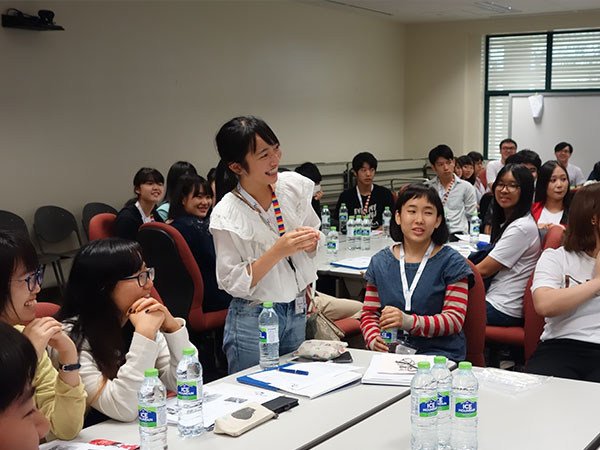
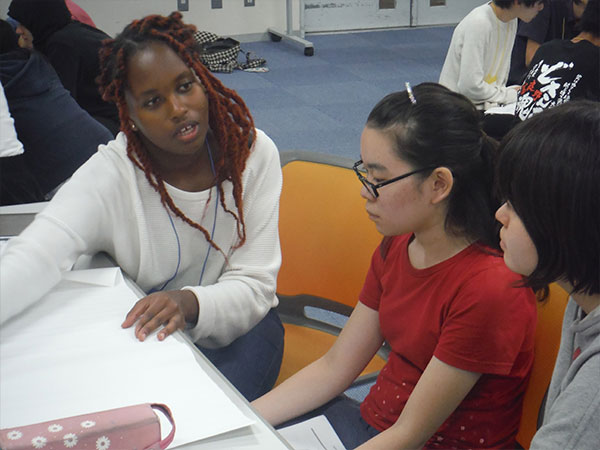
Therefore, in "LEE," students utilize English while interacting with diverse cultures and their people to undergo a liberal arts education at overseas universities alongside local college students. Liberal arts is defined as a comprehensive capacity that enables one to acquire a broad range of knowledge and understand differing mindsets and problem-solving approaches. Our goal is to nurture individuals with well-rounded competencies who can actively contribute to real-world society.
Naturally, it is impossible to master English proficiency, communication skills, and the entirety of a nation's culture during a study tour spanning only a few nights. On the other hand, it is very common that certain elements can only be grasped by going there, understood through direct dialogue, or spark deep interests and curiosity by visiting the site firsthand. Therefore, changing the style of traditional study tours (school trips), students learn at overseas universities as the culmination of their integrated studies. This allows students to leverage functional proficiencies like the presentation skills they have cultivated through prior integrated learning modules like Japanese Culture Experience and Project Studies (PS).
"LEE" consists of three courses: Singapore (Nanyang Technological University / National Institute of Education), New Zealand (Massey University), and Oita (Ritsumeikan Asia Pacific University). The student cohort of the 2015 academic year traveled to their selected courses under a schedule running from September 26th to October 3rd (the Oita course ran from September 28th to October 2nd).
Singapore is widely recognized as a nation where Chinese, Malay, and Indian populations coexist, establishing its international standing through innovative policies within a diverse cultural framework. As a financial hub of Asia, many Japanese corporations have expanded operations there. New Zealand is a country where the indigenous Maori and immigrant populations coexist, having established a multicultural society quite early on a global scale. As an agricultural nation, it maintains robust economic ties with the Pacific Rim. While both countries share historical backgrounds involving Japan during World War II, they have overcome those negative aspects to foster thriving mutual exchanges. In Oita, students study at Ritsumeikan Asia Pacific University (APU), which hosts a large cohort of international students from all over the globe and conducts lectures entirely in English.
Following the conclusion of the program, participants deliver speeches about LEE during their regular English courses. Here is a selection of excerpts from those speeches.
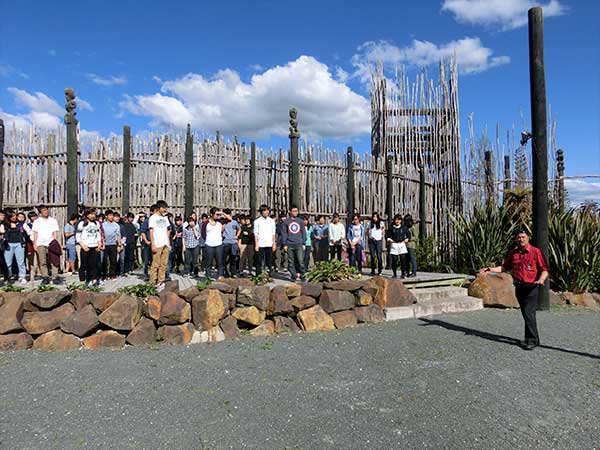
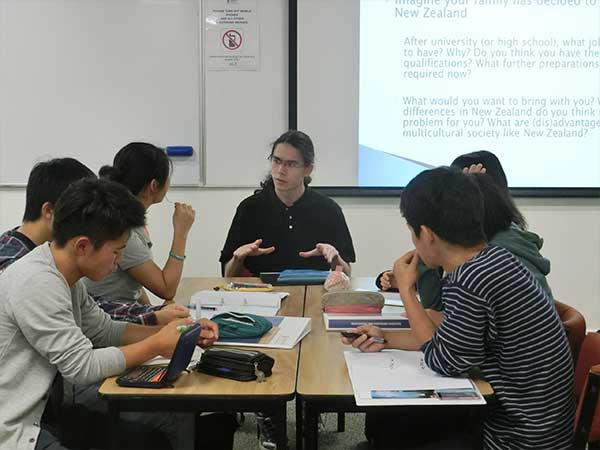
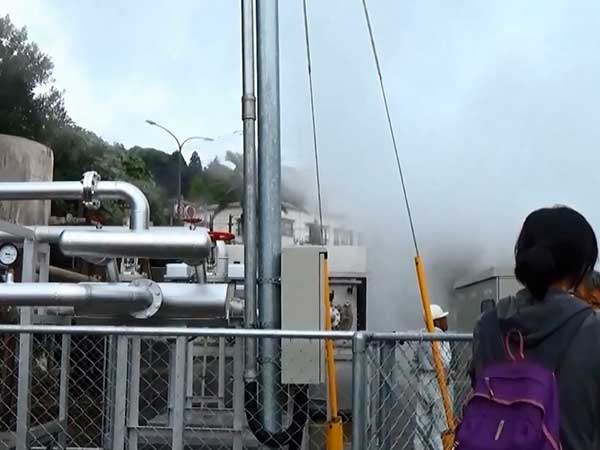
For the LEE New Zealand Course, students visited Massey University near Auckland, just as they did last year. Because the university lectures were conducted entirely in English, the students initially seemed overwhelmed with anxiety. However, thanks to the local professors who developed approachable lessons tailored to each student's level, they were able to comprehend the content well. They engaged in daily thematic learning centered around core issues critical to New Zealand, such as "Maori Culture," "Immigrants and Refugees," and "Renewable Energy," concluding the final day with English presentations delivered before the professors and staff.
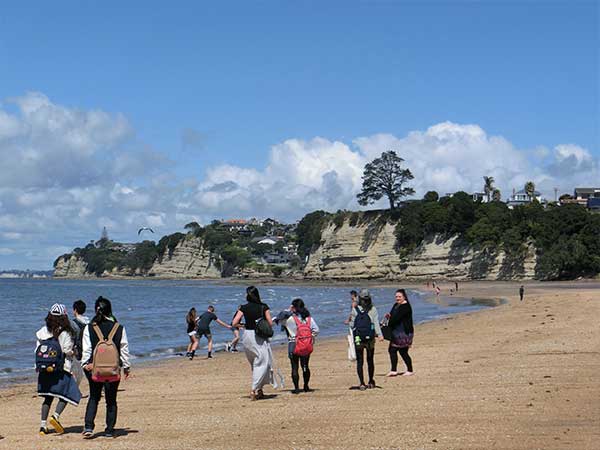
Alongside the English lectures, homestays were another major source of anxiety for the students. However, once the stays actually began, any apprehension quickly vanished into thin air; they fully enjoyed the cultural exchange, with students smiling every day as they shared updates about their respective host families with one another.
Although the students were initially terrified in many ways of a schedule completely immersed in English, upon returning to Japan, nothing but highly positive feedback was heard, such as "It was so fun" and "I'm so glad I chose the New Zealand course." This clearly demonstrates that they gained a precious experience that is rarely available through standard pathways.
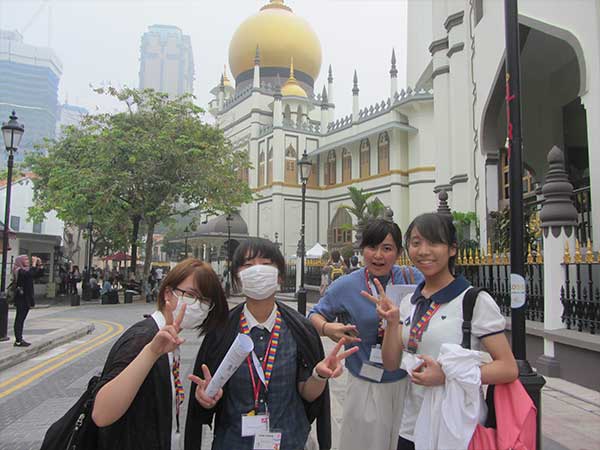
The Singapore Course leverages the nation's unique multi-ethnic environment, allowing students to learn along captivating themes such as multicultural coexistence, the development of the tourism industry, the history of war and its relationship with Japan, as well as environmental issues and sustainable development. On the first day, students visit historical war sites on Sentosa Island and enjoy free exploration. From the second day onward, mornings are spent at Nanyang Technological University deepening connections through discussions and versatile activities with local students, while afternoons are dedicated to touring war-related landmarks and exploring multicultural attractions such as Little India and local mosques.
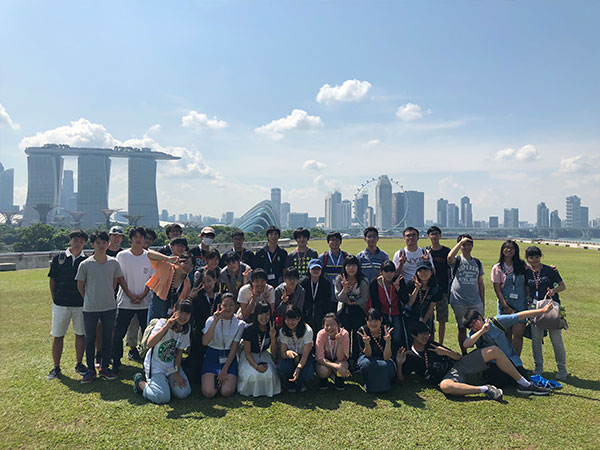
Additionally, the itinerary is packed with rich content, including visits to unique water treatment facilities and university campus tours. Naturally, students can also take photos with the Merlion and walk around the beautiful Marina Bay area to fully soak in the essence of Singapore. Provided one has a proactive desire to engage with the local population, there is a tremendous amount to learn and valuable experiences to be gained.